Do Anti-Choking Devices Work? What Parents Need to Know About LifeVac and Other Devices
“Do anti-choking devices work?” “Should I buy an anti-choking device?”
As an Infant and Child CPR & Choking instructor here at Main Line Family Education, these questions often come up. Many parents wonder if they should buy an anti-choking device like LifeVac or DeChoker, as almost all of them are being targeted with scary advertisements on social media – myself included!
Recently, there has been an important development in this conversation: LifeVac is now FDA-authorized. But what does that actually mean, and does it change our recommendation for parents and caregivers?
Let’s take a closer look.
Anti-Choking Devices Aren’t a Substitute for Learning CPR
One important consideration is that these devices aren’t appropriate for every age group.
Not for Babies: These devices are not recommended for children under 12 months or under 22 pounds. Babies become more mobile and start eating solids around 6 months, increasing choking risk, yet these devices shouldn’t be used at this age. This is something that really stood out to me when I took a deeper dive into these products.
Many parents likely don’t know this and would rely on a device for their baby that can be more harmful or completely ineffective, creating a false sense of security.
Parents and caregivers should understand that having an anti-choking device at home does not mean they are prepared to respond to a choking emergency. Knowing how to recognize choking and perform the appropriate rescue techniques is essential.
LifeVac Is Now FDA-Authorized – But There Is an Important Distinction
In March 2026, the FDA granted LifeVac De Novo authorization, making it the first suction-based anti-choking device authorized for marketing in the United States.
This is an important distinction from previous years, when the FDA had not authorized these types of devices.
However, there’s something especially important to understand about this authorization: LifeVac is classified as a second-line treatment.
What does that mean?
The FDA’s authorization specifically identifies LifeVac as a device to be used when established Basic Life Support (BLS) choking rescue protocols have been attempted without success.
In other words, it is not intended to replace traditional choking rescue techniques or be the first thing you reach for when someone is choking.
The recommended approach remains:
- Recognize the signs of severe choking.
- Activate emergency medical services (call 911).
- Begin the appropriate choking rescue protocol.
- If the established protocol is unsuccessful, LifeVac may be considered as a second-line intervention, following the manufacturer’s instructions.
LifeVac’s FDA authorization is a meaningful regulatory development, but it does not change the importance of learning traditional choking rescue techniques first.
My Thoughts on Anti-Choking Devices as a Parent
I love to share personal stories and my experience as a parent of three small children during my classes. I talk about how my toddler is always getting into things, often when we’re away from home. For example, he puts shells in his mouth at the beach, and he routinely tries to eat mulch and acorns during our visits to the park.
I have often asked myself – would I have one of these items on me at those times if he were to choke? No. But I do always have my two hands.
And this is what I tell our parents – you will always have your two hands in an emergency.
Learning how to use them to help an infant, child, or adult who is choking is the most important thing that you can do. You don’t want to waste precious time looking for a device or trying to figure out how to use it when someone is experiencing a life-threatening emergency.
An anti-choking device may be something you choose to have available as a backup, but it should never give you a false sense of security or replace the skills needed to respond immediately.
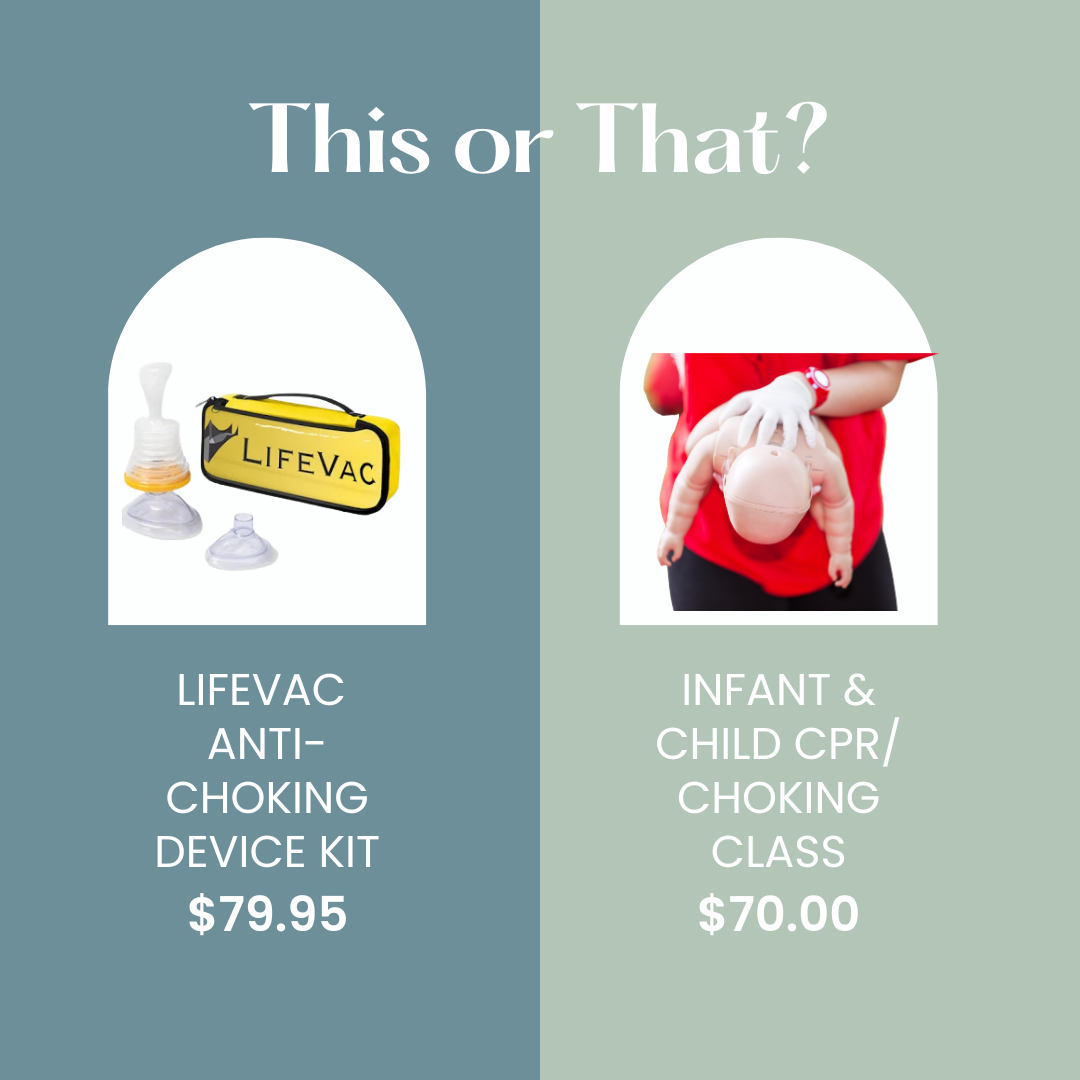
Plus, when comparing costs, an Infant & Child CPR and Choking course is more cost-effective and teaches far more than choking relief. Learn choking relief, how to perform CPR, and how to use an AED all in one class!
What Does the Research Say?
There is still limited independent research on suction-based anti-choking devices.
A small 2023 study looked at the efficacy of LifeVac and DeChoker. Saltines, grapes, and cashews were placed at the true vocal cords of a fresh cadaver. The DeChoker failed to remove the obstructions in all trials, and LifeVac was only successful in removing the barium-moistened saltines. Both devices applied significant pressure to the tongue.
Additionally, a systematic review of the research from 2020 found many weaknesses in the limited available data.
The FDA’s authorization of LifeVac is an important development, but it is worth understanding that regulatory authorization does not mean the device should be used as a first-line response.
The American Heart Association’s 2025 CPR and ECC Guidelines continue to emphasize established choking rescue techniques. The guidelines also note that there is insufficient evidence to make a recommendation for the use of suction-based airway clearance devices in adults and children.
This reinforces why learning established rescue techniques remains so important.
Learn Traditional Choking Rescue Methods
Traditional choking rescue methods remain the first line of defense. The American Heart Association’s 2025 guidelines recommend the following:
For infants under one year:
- Give five back blows.
- Alternate with five chest thrusts.
- Continue until the object is expelled or the infant becomes unresponsive.
For children over one year and adults:
- Give five back blows.
- Alternate with five abdominal thrusts (commonly known as the Heimlich maneuver).
- Continue until the object is expelled or the person becomes unresponsive.
If someone becomes unresponsive, begin CPR and follow the appropriate emergency response protocol.
It’s important to recognize that not every choking incident requires intervention. Someone who is coughing forcefully and able to make sounds should be encouraged to continue coughing while being closely monitored. The rescue techniques above are for severe airway obstruction.
These skills are important for everyone – not just parents. Grandparents, babysitters, teachers, childcare providers, and anyone responsible for another person’s safety should know how to respond.
We recommend refreshing your training regularly so that these skills remain familiar.
The Bottom Line
So, should you buy an anti-choking device?
That’s a personal decision, and the FDA authorization of LifeVac is certainly an important development. We recognize that some families may feel more comfortable having one available as a backup.
However, our recommendation at Main Line Family Education remains the same: Learn traditional choking rescue techniques first.
LifeVac is FDA-authorized as a second-line treatment, not a replacement for established choking protocols. Having a device available is not the same as knowing how to respond when someone is choking.
Choking can happen anywhere – at home, at a restaurant, at school, or on the playground. The ability to recognize an emergency and respond quickly with your own hands is invaluable.
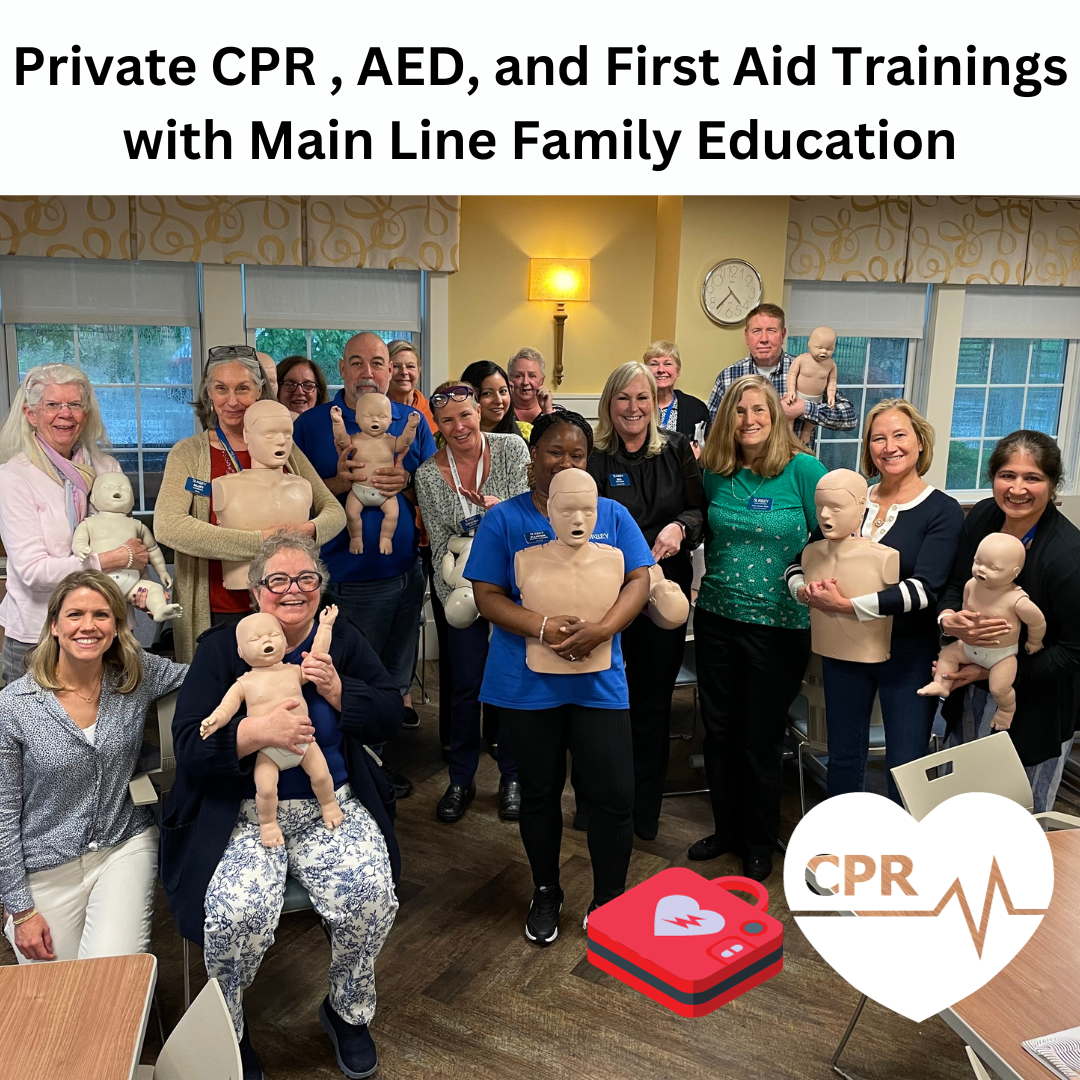
At Main Line Family Education, we offer hands-on Infant & Child CPR and Choking classes for parents, grandparents, and caregivers. You’ll learn how to recognize choking, perform age-appropriate choking rescue techniques, administer CPR, and use an AED.
Because when every second counts, knowing what to do matters.
Learn more about our Infant & Child CPR and Choking classes here.
References
- U.S. Food & Drug Administration. (March 4, 2026). LifeVac De Novo Classification Order (DEN250012). https://www.accessdata.fda.gov/cdrh_docs/pdf25/DEN250012.pdf
- American Heart Association. (2025). 2025 Guidelines for CPR and Emergency Cardiovascular Care – Adult and Pediatric Basic Life Support. https://cpr.heart.org/en/resuscitation-science/cpr-and-ecc-guidelines
- Ramaswamy, A., Done, A., Solis, R., Srikanth, M., Olinde, L., & Belafsky, P. (2023). The efficacy of two commercially available devices for airway foreign body relief: A cadaver study. Laryngoscope Investigative Otolaryngology, 8(3), 708–711. https://doi.org/10.1002/lio2.1057
- Dunne, C. L., Peden, A. E., Queiroga, A. C., Gomez Gonzalez, C., Valesco, B., & Szpilman, D. (2020). A systematic review on the effectiveness of anti-choking suction devices and identification of research gaps. Resuscitation, 153, 219–226. https://doi.org/10.1016/j.resuscitation.2020.02.021
- U.S. Food & Drug Administration. Update: FDA Encourages the Public to Follow Established Choking Rescue Protocols. https://www.fda.gov/medical-devices/safety-communications